Garage Door Insulation Installation Services in Lincoln, NE
Garage Door Insulation Installation Kings provides garage door insulation installation, insulation kit fitting, and door rebalancing services in the Lincoln, NE area for both residential and commercial properties, from single-car steel doors to double doors and shop doors. Contact us now for a free estimate.
How Much Does Garage Door Insulation Installation Cost in Lincoln, NE?
Garage door insulation installation in Lincoln, NE costs anywhere from $230 to $650 on average for one standard steel door, with the insulation included. The price depends on the door width, the insulation type and R-value, the number of sections, windows and struts, whether the springs need adjusting afterwards, and how many doors we insulate.
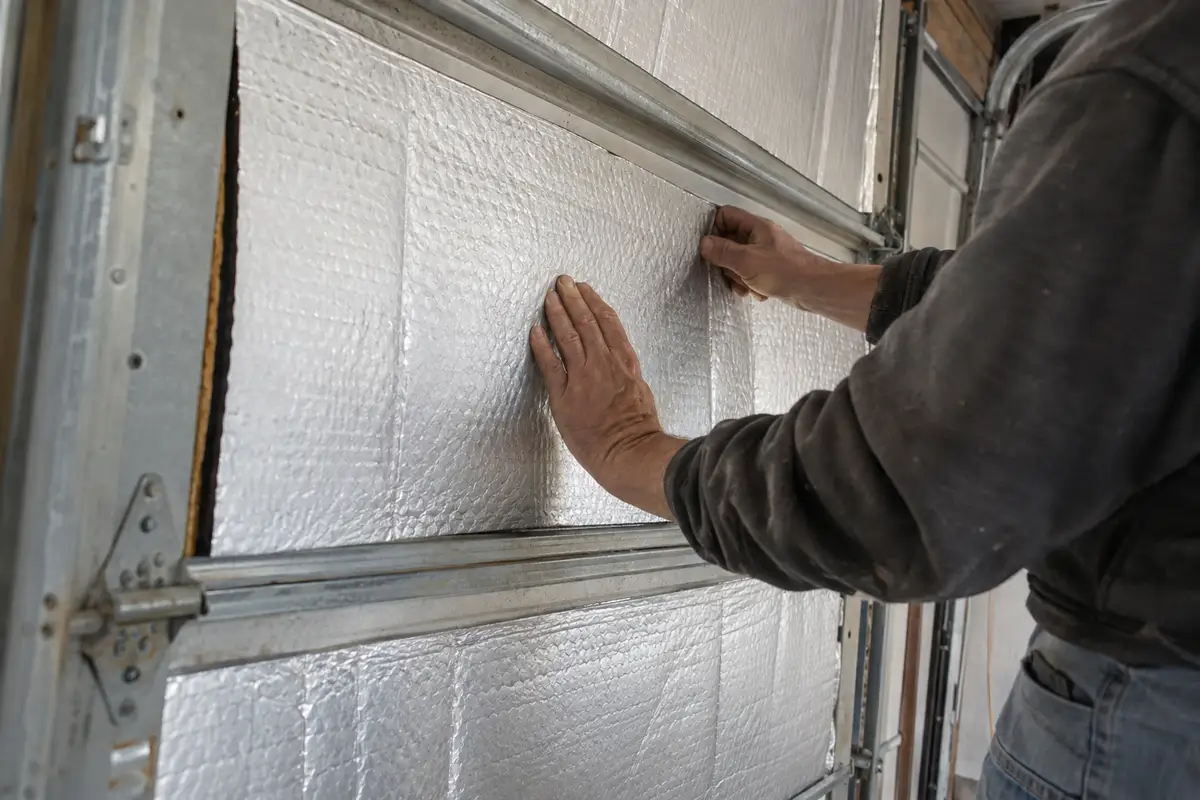
Do You Insulate Garage Doors at Homes and Businesses?
Yes, we insulate garage doors on houses, townhomes, shops, and small commercial buildings. Let us know the property type and how many doors you want insulated.
Do You Service My Area?
Yes, we cover the Lincoln, NE area. Send us the property address and we'll confirm.
Can You Insulate My Existing Garage Door Instead of Replacing It?
Yes, if it's a single-layer steel pan door in good working order, which is the kind most kits are made for. We fit insulation between the steel channels on the back of each section. A dented or rusted-through door is usually better replaced.
Is It Worth Insulating My Garage Door?
Yes, for an attached garage, a heated garage, a workshop or home gym, or a garage under a bedroom. For a detached parking-only garage, we'd usually tell you to skip it.
How Much Will Insulating My Garage Door Save on Energy Bills?
Usually a modest amount, and mostly when the garage is attached, heated, or under a living space. We'll tell you if the walls, ceiling or seals would save you more than the door.
Is Insulating My Door Cheaper Than Buying an Insulated Garage Door?
Yes, usually a few hundred dollars against roughly $750 to $2,000 or more for a new insulated door. If yours is old or dented, we'd suggest pricing a new door with injected polyurethane, which is stiffer and warmer.
How Soon Can You Insulate My Garage Door?
We can usually book a job within a few days, since standard kits and foam board are easy to get. Unusual door sizes or a large commercial door take us longer to plan.
What Information Do You Need for a Garage Door Insulation Quote?
We need the address, the door's width and height, the number of sections, and a photo of the inside of the door. Mention any windows, struts, or bracing, and whether the door already has any insulation.
Will I Need to Be Home While You Insulate the Door?
No, as long as we can get into the garage and the door can be opened and closed. Someone should be there at the end if you want to see the door's balance tested.
Can I Have My Garage Door Insulated if I Rent?
Yes, with your landlord's permission, since the springs may need adjusting afterwards.
Can I Get a Price Before the Work Begins?
Yes, we confirm the price before starting. If the balance test shows the springs need adjusting, we tell you what that adds before doing it.
How Long Does Garage Door Insulation Installation Take?
We usually finish a typical door in a few hours, including cutting each piece to fit and testing the balance. Double doors and doors with windows or struts take longer.
Will Insulation Make My Garage Door Too Heavy?
No, not if the springs are set for the new weight. Adding even 10 to 20 pounds can upset the balance, so we test the door by hand after every install.
Do You Adjust the Springs After Insulating the Door?
Yes, if the door won't stay put when lifted halfway by hand, we adjust the torsion or extension spring tension. Spring work is dangerous and isn't something to try yourself.
Will Insulating My Garage Door Affect the Opener?
No, not once the door is balanced again. An unbalanced door makes the opener strain and wear out sooner, so we rebalance it and recheck the safety reverse and photo eyes.
Can You Insulate a Two-Car Garage Door?
Yes, we insulate double doors. A 16 foot door usually takes two kits' worth of panels, so it costs more in material and time than a single door.
Can You Insulate a Garage Door With Windows?
Yes, we cut the insulation around the window frames. The glass itself stays uninsulated, so a row of windows lowers the door's overall result.
Can You Insulate a Door With Struts or Hurricane Bracing?
Yes, in most cases we cut the panels to fit around struts. Some kits don't fit doors with aftermarket hurricane braces, so send a photo and we'll choose material that works.
Can You Insulate a Wood Garage Door?
Yes, in some cases, but often it isn't worth it. Raised-panel wood doors have shallow recesses that hold insulation poorly, and wood doors are already heavy on their springs.
Can You Insulate an Aluminum Garage Door?
Yes, if the frame has channels that can hold foam panels. Full-view glass aluminum doors have almost nothing to insulate, so we'd point you to an insulated door instead.
Can You Add More Insulation to an Already Insulated Garage Door?
No, not usually. Two-layer doors have foam with a backing over it and three-layer doors have foam sealed between steel skins, so there's no open channel to fill.
Can You Insulate a Commercial Sectional Door?
Yes, we insulate steel sectional doors on shops and warehouses. Rolling steel doors that coil up can't take board insulation, so they need an insulated door instead.
Will Insulating My Garage Door Keep the Garage Warmer in Winter?
Yes, it cuts heat loss through the door, which is often the biggest uninsulated surface in a garage. Bare walls and gaps around the door still let cold in.
Will Insulating My Garage Door Keep It Cooler in Summer?
Yes, especially on a door that faces the afternoon sun. Foil-faced foam or a radiant barrier reflects heat off the hot steel.
Will Insulation Stop Condensation on My Garage Door?
No, but it usually reduces it by keeping the door surface warmer. A garage full of wet cars or laundry will still sweat, so ventilation matters too.
Will Insulating My Garage Door Make It Quieter?
Yes, insulation damps the drumming of a single-layer steel door.
Should I Insulate My Garage Door if There's a Room Above the Garage?
Yes, it helps, but the ceiling under the room and the wall shared with the house matter more. Insulating the door works best alongside those.
Should I Insulate the Garage Walls Too?
Yes, if you want the garage to hold its temperature. Insulating only the door still leaves heat moving through bare walls and the roof.
Can You Replace the Bottom Seal While You Insulate the Door?
Yes, we can replace a worn bottom seal or side stops on the same visit. Air leaking under the door can undo much of what the insulation gains.
Do I Need to Move My Car Out of the Garage?
Yes, please park outside and clear the floor space behind the door. We need room to cut panels and run the door up and down.
Should I Clean the Inside of the Door Before You Arrive?
No, we wipe each panel clean and let it dry before fastening anything. Just tell us about any rust or peeling paint on the inside.
Can You Insulate a Garage Door in Cold Weather?
Yes, in most cases. Adhesive fasteners grip best on clean, dry steel, so on very cold or damp days we may warm the garage first or use mechanical retainers.
What Insulation Do You Use on Garage Doors?
We use vinyl-faced fiberglass panels, expanded polystyrene board, or foil-faced rigid foam, cut to fit each pan. Most garage door channels are about 1.75 inches deep, so board is usually 1.5 inches thick or less.
What R-Value Can I Get by Insulating My Existing Garage Door?
Most of our retrofits land around R-4 to R-8, depending on the material. Foil-faced foam board 1.5 inches thick can reach close to R-10, still below a high-end factory insulated door.
Which Is Better for a Garage Door, Foam Board or Fiberglass?
Foam board shrugs off moisture and won't sag. Fiberglass kits often rate higher, around R-8, but can hold water if the facing tears, so we keep it away from the wet bottom section.
Does Reflective Foil Insulation Work on a Garage Door?
Yes, mostly against summer sun. Foil ratings assume an air gap that a sheet taped flat to steel doesn't have, so it does less in winter than foam or fiberglass.
Is Foam Insulation a Fire Risk on a Garage Door?
No, not when it's the right product. We use only faced, fire-rated foam on garage doors, because bare, unrated foam board is flammable.
Can I Insulate My Garage Door Myself?
Yes, store kits run about $50 to $280 and suit a handy owner. The hard part is the spring adjustment afterwards, which should be left to a garage door technician.
